


Behind the Tap: Episode 3
In this episode, Deputy General Manager/Chief Operations Officer Don Pannell discusses Prince William Water's spring hydrant flushing program, preventive maintenance and water capacity.
Listen to the podcast on Apple Podcasts or Spotify.
-
Kathy: Hello and welcome to Prince William Water’s quarterly podcast, Behind the Tap. We're here to share information about your water and wastewater utility and how you can play a role in protecting our water resources. Each podcast episode features a member of the Prince William Water team discussing current topics and answering questions from our customers. Today, our guest is Don Pannell, who's the Deputy General Manager and Chief Operations Officer for Prince William Water. Don, we're really happy to have you here today for this conversation.
Don: Great. Excited to be here.
Kathy: So, I know you are a longtime member of the Prince William Water team. Will you just start by talking about what your role is in the organization and what's kept you working here for a number of years?
Don: Sure, happy to. So, I have a pretty fun job. I'm, you know, Chief Operations Officer. So that means I get to deal with the daily operations, oversee the daily operations, and that's the core of what we do, right? Deliver great quality water to our customers, make sure they feel like they're getting good value, collect and treat wastewater so that we protect the environment. So, in that role, I really ask a lot of questions because we've got great folks that are doing the work every day, 24/7, you know, 365 days a year. So, I ask a lot of questions about what's working well, what kind of challenges they're facing, what kinds of resources do they need, because that's a lot of what I do is trying to make sure we've got the right resources in place to perform at a really high level every day. Being able to do work that's meaningful, do it with people who are engaged and professional and committed to it and being successful, you know, those are the things that have really kept me going.
Kathy: You know, and I hear you. I've been here almost nine years now and it honestly feels like it's flown. So I hear what you're saying. So, you teed up my questions very nicely. You know, before I came to work here, I really had a simple view of what my water service was. I had no idea all that goes on behind the scenes. So, you use the word infrastructure. Can you start and talk with us a little bit about the infrastructure that goes into Prince William Water Service?
Don: So, moving water around and delivering water to our customers requires a lot of pumps and pipes. Water is really heavy. Water is heavy to move around and so that requires a lot of pumps and extensive amounts of pipes to move it around. We say that our book value of our assets, our infrastructure, pumps, pipes, water tanks, the book value is $1.2 billion. The replacement cost of those assets of all those facilities and pipes and pumps is probably more like $3 billion. So, it's a lot of inventory and infrastructure to take care of. Just some more stats, maybe, that help you relate. We have about 2,500 miles of water and sewer pipes. So, you know if you stretched our pipes out you go from New York to LA. I mean Prince William County is not, you know, a metropolis but it takes a lot of infrastructure to deliver the water service every day. Another example because the idea that water is heavy is really important because moving heavy water around is costly and takes a lot of attention. We deliver about 32 million gallons of water every day to customers. When you think about, you know, well, what is 32 million gallons of water? Nobody generally thinks in those terms normally. That's from a weight point of view that's like a thousand car freight train fully loaded every day. And not only do we deliver that to customers, then we also collect the wastewater, that same amount of wastewater, collect it and take it to our treatment plants to make sure we're protecting the environment. So, there's a lot of infrastructure that goes into the water service when you turn on the tap, you know, every time you want to brush your teeth. There's just a lot of infrastructure behind that.
Kathy: Well, I know this time of year we're in spring. There's a lot of what I'll call spring cleaning going on in the system and we'll talk about different aspects of that. Would you tell us about the, we call it spring flushing program, that we have going on throughout the system right now?
Don: Sure. Yeah. You know, it's an industry best practice to periodically, and we've chosen to do this every year, once a year, but it's an industry best practice to periodically change over the chlorine, the disinfectant that we use in our pipes to make sure that our system is flushed. And then also at the same time to exercise, which means to open and flush, our fire hydrants across the system. So, you know fire hydrants are iconic right? You see fire hydrants everywhere. You have some awareness that that's there in case there's a fire but that's a an important asset for fire protection for the community. So, it's important that we make sure those fire hydrants work if the fire department were to need them. It's also a great opportunity to provide a more aggressive flush in the pipes. I talked about those 2,500 miles of total pipes. About 1,300 miles of those are water mains. So, just a good practice to flush out the system in the spring. And you know, we've been doing that now for gosh, at least at a dozen years. We've gotten very proficient at the practice and it helps us assure to our partners at the fire department that all the fire hydrants are in great working condition.
Kathy: In terms of that program. So, we have over what? 12,000 fire hydrants? So people in the community, what might they see and what might they experience with their water quality during spring flushing?
Don: Sure. So, the program we've put in place and we use our water model to map out the best route. So we want to flush the system from the entry point all the way to the ends of the system. So, what they'll see is our crews out with message boards and notice actually opening a fire hydrant, allowing it to flow freely. They'll also notice as part of that pull of water from the entry point to the system to the ends, we're changing the disinfectant that we use most of the year. We use something called chloramine, which is a combination of chlorine and ammonia. Little bit tough to smell chloramine. But in the spring, during this several week period, we use free what's called free chlorine. So, it's just chlorine. Think, you know, household bleach that you use. That's the disinfectant that we switch to. And so that's has a more noticeable odor. So in your home, you know, depending on your pallet and your sensitivity, you may notice the smell of chlorine at low doses. So those are the, you might see some cloudiness in the water as we're flushing the system. Pretty rarely that will trigger a little bit of cloudiness. That's all you need to do is simply run your taps for a few minutes and that cloudiness will disappear. Sometimes that's from air that has gotten stirred up in the system. But just simply running the taps flushes that out.
Kathy: If anybody does notice that chlorine, you know, the slight taste, anything they can do to offset that?
Don: For sure. if you're really, if you like to drink the water and you don't like that chlorine smell, just having a pitcher of water that you just set on the counter for a little while, that chlorine odor will dissipate and you won't notice it at all.
Kathy: Okay. And if people have, I'm just because they people have ongoing issues, they can always call our customer service department.
Don: 24/7. We're always there. We've got some great frequently asked questions on our web page as well that give a little bit more explanation of the process, why it's beneficial, why it's recognized as a best practice.
Kathy: One of the things because I know the public sometimes sees this and we use it at event is our CCTV trucks. That's one of the ways we inspect the pipes?
Don: Exactly. Exactly. We use a lot of good technology to inspect pipes. you know, they're under the ground and so they're difficult to get to. But CCTV, closed circuit television, is a technology that's been used on our sewer mains for a long time. We have technicians who are really skilled and they'll insert a robotic camera into our sewer mains. That robotic camera scans the interior of the pipe looking for evidence of wear and tear. looking for, potential problems, looking for leaks that are coming into our sewer mains. All that data gets captured in a real organized maintenance management system so that we can then prioritize based on condition and based on the observations of that CCTV work. We can prioritize which pipes need special attention. So that's just one example of technology.
Kathy: So before I switch gears, I want to what's the big why when we talk about all of this preventive maintenance and monitoring the system, what's the big why from the customer standpoint?
Don: If you think about our main performance indicator, you know, like how do we know we're doing a good job for the customer? Well, the water needs to be on when the customer wants it on. The quality needs to be great all the time and the value, we collect bills, we collect payments from our customers every month. They need to make sure, and they need to feel like they're getting great value for the service we're giving them. So the big why, by being really smart about where we spend maintenance dollars and spend the customers money, then we can deliver service that is a high caliber and you know we feel like, and from our surveys our customers, believe we're giving good value to the customers. That's the big why.
Kathy: Great. Thank you. So, I'm going to switch gears a little bit. In each episode, we ask a question that we're hearing from our customers. So, as our COO, I think this is one that that plays into your responsibilities. As Prince William County is planning future growth and development, that could be new residential communities, new businesses, data centers. We are hearing from customers the question, “is there enough water capacity to continue serving the community?”
Don: Yeah. Yeah. It's, you know water is precious and so we take it really seriously to make sure we're stewarding uh the water resources for Prince William County. So, we absolutely have heard those same concerns. The county has been experiencing more growth in recent years, has been advocating for more growth frankly in recent years. So, the short answer to the question, and I spend a lot of time talking to customers, HOAs, industry groups, other stakeholders. The shorter, short answer is yes. Prince William Water has sufficient water capacity to support the growth that's planned in Prince William County's land comprehensive plan. It's important to point out Prince William County makes land use decisions. Our job is to give them information about our ability to serve and then to support the decisions that the county makes. We've studied the county's comprehensive plan, in detail, and we have confidence that we have capacity now and out to the end of our planning horizon which is currently 2050, to support the growth that's planned in the Prince William County comprehensive plan. to give a little more detail about data centers, because data centers are an emotional issue, for a lot of reasons, and water and the availability of water gets pulled into that conversation. So we need to address it. Last year , 2025, data centers of all the water we sold about 4% of that water went to data centers. So, while data centers are a dominant part of a conversation, they're not a huge piece of our water portfolio. So, 4% of the water we sold went to data centers last year.
Kathy: Thanks for the conversation today. We really appreciate it.
Don: Great. Thank you.
Kathy: Thank you for watching this episode of Behind the Tap. We'll be dropping the next episode in July, so be sure to subscribe on YouTube, Spotify, or Apple Podcasts. You can also find our podcasts on the Prince William Water website. We look forward to seeing you next time on Behind the Tap.
Topics in this Episode
Learn more about the topics in this episode by visiting our other pages.
-
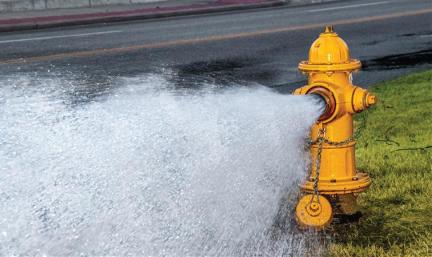
Annual Water Distribution System Flushing
Every spring, Prince William Water takes extra steps to keep your drinking water clean and fresh for daily use. Learn about our "spring flushing" program.
-
Water and Wastewater Treatment Capacity FAQ
Read about water capacity in Prince William County and how we are preparing for growth.
-
Our Investment in Infrastructure
Learn what it takes to deliver nearly 12 billion gallons of drinking water and treat 10.1 billion gallons of wastewater per year.